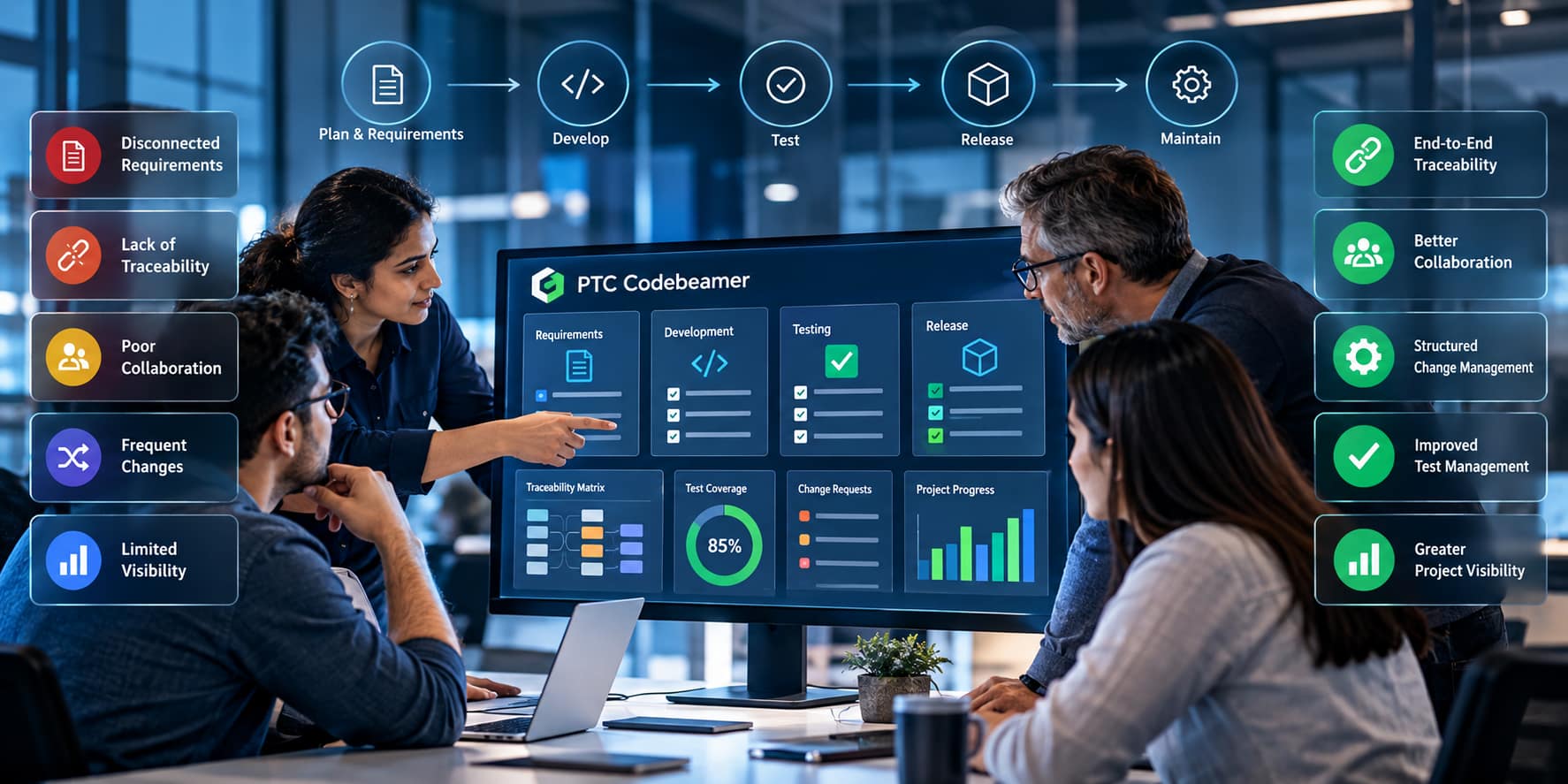
A single missed requirement can trigger a chain of problems across an entire software development project. Developers may build the wrong functionality, testers may validate outdated specifications, and project managers may discover critical issues just days before a planned release.
The frustrating part? These problems often have little to do with the technical capabilities of the team. They happen because requirements, development activities, testing records, and project decisions are scattered across disconnected tools.
For organizations developing complex software, embedded systems, or safety-critical products, even a small information gap can result in additional engineering work, delayed releases, and difficulties demonstrating compliance.
This is where Application Lifecycle Management (ALM) becomes important.
ALM helps organizations connect requirements, development, testing, change management, and verification activities throughout the software lifecycle. With the right ALM software, teams can improve traceability, strengthen collaboration, and gain better visibility into project progress.
In this guide, we explore the most common Application Lifecycle Management challenges, practical ways ALM solutions address them, and how Sumedhas Tech Solutions can help businesses explore relevant PTC ALM capabilities.
What Is Application Lifecycle Management (ALM)?
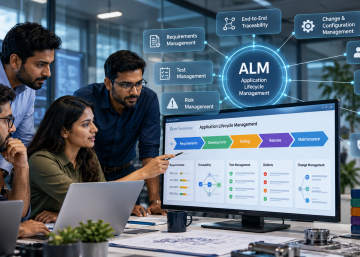
Application Lifecycle Management (ALM) is the coordinated management of an application throughout its lifecycle, from initial requirements and planning to development, testing, release, maintenance, and eventual retirement.
It combines processes, tools, information, and collaboration practices to help teams manage software development in a structured manner.
Typical ALM activities include:
- Requirements gathering, documentation, and approval.
- Software development planning and task management.
- Change requests and impact analysis.
- Test planning, execution, and defect tracking.
- Requirements traceability and verification.
- Release readiness and lifecycle reporting.
- Documentation and compliance-related evidence.
Without an effective ALM approach, these activities may be distributed across spreadsheets, email conversations, development platforms, and separate testing tools.
An ALM solution helps connect the relevant information and processes, giving teams a clearer understanding of how requirements progress through development and verification.
For businesses managing complex software products, ALM is not simply about tracking tasks. It is about maintaining the relationships between what needs to be built, how it is implemented, how it is tested, and whether it meets the intended requirements.
Why Is Application Lifecycle Management Important for Modern Software Teams?
Software development becomes more challenging as products grow in complexity, teams expand, and requirements evolve.
A project involving multiple engineering teams may have hundreds or thousands of requirements, numerous software components, frequent changes, and several rounds of testing. Managing these activities manually can become difficult to sustain.
Application Lifecycle Management helps address this complexity by providing a more structured approach to development information and process coordination.
An effective ALM strategy can help organizations:
- Improve visibility into requirements and development progress.
- Reduce confusion caused by outdated specifications.
- Track changes and their potential impact.
- Connect requirements with verification activities.
- Identify missing test coverage and unresolved defects.
- Improve collaboration between development, QA, and business teams.
- Organize records needed for reviews and compliance assessments.
The objective is to make development more predictable and information more reliable without introducing unnecessary administrative work.
8 Common ALM Challenges and How ALM Software Solves Them
Understanding the problems affecting your software development process is the first step toward selecting the right ALM solution.
1. Disconnected Requirements and Development Activities
The challenge
Software requirements often originate from different stakeholders, including customers, product managers, business analysts, and engineering teams.
As projects progress, requirements may be stored in separate documents, spreadsheets, emails, or project management systems. When specifications change, developers and testers may not receive the updated information at the right time.
This creates a risk of implementing outdated requirements, duplicating work, or delivering functionality that does not meet stakeholder expectations.
How ALM software helps
Application Lifecycle Management software provides a structured environment for creating, reviewing, approving, and maintaining requirements.
Requirements can be linked to development tasks, test cases, defects, and other project records. When a requirement changes, teams can review its relationships and identify the activities that may need to be updated.
This creates better alignment between stakeholder expectations and development work.
Key benefit: Improved requirements clarity, fewer information gaps, and better control over development scope.
Discuss ALM solutions with Sumedhas Tech Solutions.
2. Lack of End-to-End Requirements Traceability
The challenge
One of the most common ALM challenges is the inability to establish clear connections between requirements, implementation activities, and verification results.
For example, a product requirement may exist in a specification document, while its associated development task is tracked elsewhere and the corresponding test results are stored in another system.
When a reviewer asks whether the requirement has been implemented and tested, the team may need to search through several sources to establish the answer.
How ALM software helps
ALM tools help establish traceability relationships between requirements and related development and testing artifacts.
Teams can use these relationships to investigate changes, review verification coverage, identify missing links, and gather relevant project evidence.
For complex and regulated software projects, traceability is particularly important because teams may need to demonstrate how requirements have been addressed and verified.
Key benefit: Better impact analysis, more transparent verification coverage, and less manual effort when reviewing development records.
3. Poor Collaboration Between Development, QA, and Business Teams
The challenge
Developers, quality assurance specialists, product managers, and compliance teams often approach a project from different perspectives.
When each group relies on separate tools and information, misunderstandings can arise over requirement status, defect severity, acceptance criteria, and release readiness.
Decisions made during meetings or email discussions may also fail to reach everyone affected by them.
How ALM software helps
An ALM platform helps teams work with structured information and coordinated workflows.
Requirements, defects, reviews, and verification activities can be assigned to appropriate stakeholders, making responsibilities and progress easier to understand.
Documented workflows also help organizations establish consistent review and approval procedures.
Key benefit: Better cross-functional collaboration, clearer accountability, and more consistent project communication.
4. Frequent Requirement Changes and Scope Creep
The challenge
Changing customer expectations and technical requirements are normal in software development. The difficulty arises when changes are introduced without evaluating their wider impact.
A modification to one requirement may affect multiple software components, test scenarios, interfaces, or compliance documents.
If these dependencies are not understood early, teams may discover additional work late in the project, affecting delivery schedules and engineering capacity.
How ALM software helps
ALM supports structured change management by recording change requests, documenting decisions, assigning reviewers, and maintaining a history of modifications.
Connected lifecycle information helps teams investigate which requirements, development activities, and verification records may be affected.
This enables stakeholders to evaluate proposed changes before deciding whether to approve, defer, or reject them.
Key benefit: Better scope control, improved change visibility, and more informed development planning.
5. Testing Delays and Incomplete Verification Coverage
The challenge
Testing becomes more difficult when test cases, requirements, and defects are maintained independently.
A changed requirement may not be reflected in its associated test case. A defect may be marked as resolved without a clear connection to the original issue. Meanwhile, project managers may lack visibility into which requirements remain unverified.
These gaps can delay releases and increase the risk of defects reaching customers.
How ALM software helps
ALM test management capabilities can connect requirements with test cases, execution results, and defect records.
This allows teams to review verification progress, investigate failed tests, and identify requirements without sufficient testing evidence.
Where appropriate, ALM can also complement automated testing tools by maintaining relationships between test activities and the requirements they verify.
Automation alone does not guarantee adequate coverage; test quality and validation practices remain essential.
Key benefit: Improved test visibility, more organized defect resolution, and better-informed release decisions.
6. Difficulty Maintaining Compliance and Audit Readiness
The challenge
Organizations developing software for medical devices, automotive systems, aerospace applications, and other regulated environments may need detailed records of requirements, changes, approvals, and verification activities.
When this information is spread across different systems, preparing for reviews and audits can require substantial manual effort.
Teams may also struggle to establish which specification was approved, which version was tested, and whether the required reviews were completed.
How ALM software helps
ALM can help organizations maintain structured requirements, change histories, traceability relationships, review records, and verification evidence.
Configured workflows can support documented approval processes and improve the consistency of lifecycle records.
These capabilities can make it easier to retrieve information and investigate the history of a development decision.
However, implementing ALM software does not automatically establish regulatory compliance. Organizations must still follow applicable standards, validate relevant processes, and maintain appropriate controls.
Key benefit: Better-organized evidence, improved traceability, and more efficient preparation for audits and technical reviews.
7. Limited Visibility Into Project Progress and Delivery Risks
The challenge
A project may appear to be progressing well because most development tasks are marked complete. However, critical requirements may remain unverified, high-priority defects may still be open, or required approvals may be delayed.
Manually compiling reports from multiple systems makes it harder for project managers to identify these risks promptly.
How ALM software helps
ALM dashboards and reporting capabilities can provide visibility into requirement status, outstanding changes, test execution, defects, and other configured project indicators.
Teams can use these reports to identify bottlenecks, prioritize unresolved work, and communicate project status more consistently.
For example, a project manager may identify requirements awaiting verification before the planned release date and assign resources to address the gap.
The accuracy of these insights depends on reliable data and consistent use of the platform.
Key benefit: Better project visibility, earlier risk identification, and more informed planning.
8. Knowledge Loss During Software Maintenance
The challenge
Software products frequently remain in use after the original development team has moved to other projects.
New team members may struggle to understand why a requirement was introduced, which earlier defect prompted a change, or how a particular behavior was validated.
When decisions are documented inconsistently, maintenance becomes more dependent on individual employees and informal knowledge transfers.
How ALM software helps
ALM helps preserve relevant lifecycle records, including requirements, change histories, linked development activities, test evidence, and review decisions.
Maintenance teams can use these records to investigate issues and understand the context behind earlier engineering work.
This information does not replace good technical documentation, but it provides a structured way to maintain and navigate important development history.
Key benefit: Better knowledge retention, smoother handovers, and more informed maintenance decisions.
What Are the Key Benefits of ALM Software?
The value of Application Lifecycle Management extends beyond organizing development activities. A well-planned ALM implementation can improve the quality of information used throughout the software lifecycle.
Better Requirements Management
Structured requirements management helps teams maintain clearer specifications, track changes, and understand the status of stakeholder requests.
Improved Traceability
Connecting requirements, development activities, tests, and defects helps organizations understand whether the intended functionality has been implemented and verified.
Reduced Rework
Better change visibility and earlier identification of missing information can help reduce avoidable corrections caused by outdated specifications or incomplete coordination.
Stronger Quality Management
Links between requirements, tests, and defects help QA teams investigate issues and understand verification progress.
More Efficient Compliance Preparation
Organized lifecycle records and traceability relationships can reduce the effort involved in gathering evidence for reviews and assessments.
Improved Project Visibility
Configured dashboards and reports can help managers understand outstanding work, potential risks, and the status of critical requirements.
Actual outcomes depend on the organization’s processes, data quality, tool configuration, and employee adoption. Businesses should establish baseline measurements before evaluating improvements.
How PTC Codebeamer Supports Application Lifecycle Management
When evaluating ALM software, organizations should look for capabilities that address their specific challenges rather than choosing a platform based on feature lists alone.
PTC Codebeamer is an Application Lifecycle Management platform designed to support requirements management, traceability, test management, and structured development workflows for complex software and systems engineering.
Its capabilities may be relevant to organizations seeking better coordination between requirements, development, verification, and compliance-related activities.
Requirements Management With PTC Codebeamer
Requirements management helps development teams document, review, organize, and maintain the specifications that guide a project.
Codebeamer supports structured requirements workflows and relationships with other lifecycle artifacts, helping teams manage evolving specifications more systematically.
End-to-End Traceability With ALM Tools
Requirements traceability is particularly important when development teams need to understand the relationship between specifications, implementation work, and verification results.
Codebeamer supports traceability across relevant lifecycle artifacts, helping teams review dependencies and investigate the impact of changes.
Test Management and Verification
Codebeamer provides test management capabilities that help teams organize testing activities and maintain visibility into verification progress.
When requirements and test records are connected, teams can more easily review coverage and investigate unresolved issues.
Structured Development Workflows
Organizations can use configured workflows to manage reviews, changes, approvals, and other lifecycle activities.
The appropriate configuration depends on the team’s operating model, governance requirements, and integration landscape.
ALM for Complex and Regulated Development
For organizations developing complex or regulated products, structured requirements, traceability, and verification records can support internal reviews and compliance-related processes.
Specific regulatory needs must be evaluated against the relevant standards and the organization’s procedures.
Want to see how PTC Codebeamer could fit your development process?
Request a PTC Codebeamer demo from Sumedhas Tech Solutions.
Discuss your requirements management, traceability, and testing challenges with our team to explore relevant ALM capabilities.
How to Choose the Right ALM Software for Your Business
Selecting an ALM solution requires an understanding of your current development process and the problems you want to resolve.
Consider these factors before making a decision.
Identify Your Biggest Development Challenges
Determine whether your primary concerns involve requirements changes, testing gaps, compliance documentation, fragmented tools, or limited project visibility.
This helps you prioritize the capabilities that will provide the greatest practical value.
Evaluate Requirements Traceability Needs
Identify the relationships your organization must maintain between requirements, development tasks, test cases, defects, and release records.
If your products are subject to specific regulatory obligations, map these needs to the applicable standards and internal procedures.
Review Tool Integration Requirements
Assess how the ALM platform will interact with your source control, testing, CI/CD, project management, and other engineering systems.
Consider data ownership, synchronization, permissions, and the handling of incomplete updates.
Assess Workflow Flexibility
Review whether the solution can support your approval processes, development methodologies, review responsibilities, and reporting needs.
Avoid unnecessary customization that could increase implementation and maintenance complexity.
Consider User Adoption and Training
Evaluate how developers, testers, managers, and other stakeholders will use the platform in their daily work.
Role-specific training and clear process ownership can help encourage consistent use.
Define Measurable Success Criteria
Establish baseline indicators such as engineering change approval time, requirements traceability coverage, unresolved defects, or time spent preparing review documentation.
These measures help you assess whether the implementation is delivering the expected improvements.
How Sumedhas Tech Solutions Helps Businesses Explore PTC ALM Solutions
Choosing an ALM platform is an important decision, particularly for businesses managing complex software development processes or seeking stronger traceability and verification practices.
Sumedhas Tech Solutions is an authorized PTC PLM license provider. Businesses evaluating PTC ALM capabilities can discuss their requirements with the team to explore relevant licensing options and determine suitable next steps.
Explore PTC Codebeamer for Your ALM Requirements
Organizations considering PTC Codebeamer should evaluate their development workflows, traceability needs, user requirements, and existing engineering tools.
Sumedhas Tech Solutions can help prospective customers explore relevant PTC licensing options and discuss the capabilities that may align with their requirements.
Understand Your Requirements Management Challenges
Some organizations need better control over changing requirements. Others want to improve test traceability, coordinate multiple teams, or organize development records for technical reviews.
Identifying these priorities before selecting a solution helps ensure that the evaluation focuses on practical business needs.
Discuss Your ALM Implementation Requirements
Businesses can discuss their existing tool landscape, integration needs, and implementation-related requirements with Sumedhas Tech Solutions to understand the appropriate scope of support.
Specific service availability and project scope should be confirmed during the consultation.
Contact Sumedhas Tech Solutions about your ALM requirements.
Looking for an ALM solution that fits your development environment? Discuss your challenges with our team and explore suitable PTC capabilities for requirements management, traceability, and software lifecycle coordination.
Best Practices for Successful Application Lifecycle Management
Implementing ALM software is only one part of improving software development. Organizations also need consistent processes, reliable data, and clear ownership.
Follow these practices to establish a stronger foundation.
Start with a defined problem. Identify one or two major bottlenecks, such as missing traceability links or lengthy change approvals, before expanding the implementation.
Standardize essential workflows. Establish how requirements are created, reviewed, approved, changed, and verified.
Assign clear responsibilities. Ensure that teams understand who owns requirements, test records, defects, and lifecycle data quality.
Integrate tools thoughtfully. Prioritize integrations that reduce duplicate data entry and preserve important relationships between engineering records.
Train users according to their roles. Help developers, QA specialists, managers, and compliance teams understand the workflows relevant to their responsibilities.
Measure meaningful outcomes. Track a small number of relevant indicators and review them consistently.
Improve incrementally. Use feedback and measured results to refine processes before expanding the solution across the organization.
A structured implementation helps organizations improve lifecycle management without creating unnecessary administrative complexity.
Overcome ALM Challenges With Sumedhas Tech Solutions
Disconnected requirements, incomplete traceability, testing gaps, unmanaged changes, and difficult compliance preparation can affect software quality and delivery schedules.
Application Lifecycle Management helps address these challenges by connecting requirements, development activities, testing, changes, and verification records through a more structured approach.
For businesses evaluating ALM software, the first step is to identify where their current processes are falling short and determine which capabilities would address those issues.
PTC Codebeamer is one option worth evaluating for requirements management, traceability, testing, and coordinated development workflows.
Sumedhas Tech Solutions can help businesses explore relevant PTC licensing options and discuss their ALM requirements.
Ready to improve your software lifecycle management process?
Request a consultation to discuss your requirements, explore PTC Codebeamer capabilities, and identify an ALM approach suited to your organization.
Request a PTC Codebeamer demo or consultation.
Take the next step toward more structured requirements management, stronger traceability, and better visibility across your software development lifecycle.
Frequently Asked Questions About ALM Software
What is Application Lifecycle Management (ALM)?
Application Lifecycle Management is the coordinated management of software requirements, development, testing, release, maintenance, and related lifecycle information.
What are the most common ALM challenges?
Common challenges include disconnected requirements, limited traceability, poor collaboration, frequent specification changes, testing gaps, compliance documentation difficulties, limited project visibility, and knowledge loss.
How does ALM software improve software development?
ALM software helps connect requirements, development activities, testing, changes, and defects. This can improve coordination, change impact analysis, verification visibility, and lifecycle reporting.
What is the difference between ALM and SDLC?
The Software Development Life Cycle (SDLC) describes the stages involved in developing software. ALM refers to the tools, processes, and governance used to coordinate and manage information and activities throughout those stages and, often, ongoing maintenance.
What is PTC Codebeamer used for?
PTC Codebeamer is an ALM platform that supports requirements management, traceability, test management, and structured development workflows, particularly for complex software and systems engineering.
Is ALM software useful for regulated industries?
ALM can support requirements traceability, change management, verification evidence, and documented workflows that are relevant to regulated development. Compliance also depends on the applicable standards, organizational procedures, and required validation.
How do I choose the right ALM solution?
Start by identifying your development challenges, traceability requirements, existing tools, integration needs, workflow requirements, and measurable business objectives. Evaluate platforms against those criteria.
How can Sumedhas Tech Solutions help with PTC ALM?
Sumedhas Tech Solutions is an authorized PTC PLM license provider. Businesses can contact the team to discuss relevant PTC licensing options and their requirements for ALM capabilities.


You must be logged in to post a comment.