
PLM: From Idea to End-of-Life The Complete Guide to Product Lifecycle Management
Imagine designing a product that moves smoothly from concept to engineering, manufacturing, service, and eventually retirement—without data confusion, version conflicts, or communication gaps.
Yet for many engineering and manufacturing organizations, the reality is very different. Product data lives across multiple tools, teams struggle with outdated files, and decision-making slows down because the right information is hard to find.
This is where Product Lifecycle Management (PLM) becomes essential.
PLM connects people, processes, and product data into a single digital framework—ensuring that every stage of a product’s life is visible, controlled, and efficient.
In this guide, we’ll explore what PLM is, why organizations rely on it, the challenges it solves, best practices for implementation, and how companies like Sumedhas Tech Solutions help businesses successfully adopt PLM technologies.
What is Product Lifecycle Management (PLM)?
Product Lifecycle Management (PLM) is a strategic approach used by organizations to manage all product-related data and processes throughout the entire lifecycle of a product—from concept and design to manufacturing, service, and disposal.
A PLM system acts as the single source of truth for product information, enabling collaboration between teams such as:
- Product design
- Engineering
- Manufacturing
- Quality teams
- Procurement
- Service and maintenance
Instead of relying on disconnected spreadsheets, email chains, and scattered files, PLM creates a centralized digital backbone that keeps everyone aligned.
Industry research shows that organizations adopting PLM solutions can reduce product development costs by up to 20% and improve time-to-market by nearly 30% (Source: CIMdata industry reports).
Why Modern Engineering Organizations Need PLM
Product complexity continues to increase across industries—from automotive and aerospace to electronics and industrial equipment.
Engineering teams today must manage:
- Multiple CAD versions
- Frequent design changes
- Global collaboration
- Compliance requirements
- Rapid product innovation cycles
Without a structured system, these challenges quickly lead to delays and costly mistakes.
Common Challenges Without PLM
Many organizations experience the following pain points:
- Version Confusion
Teams often work on outdated CAD files or BOMs. - Siloed Data Across Departments
Engineering, manufacturing, and procurement teams may rely on different systems. - Inefficient Change Management
Tracking engineering change requests (ECRs) and approvals becomes complex. - Limited Visibility Across Product Stages
Leaders struggle to see the complete lifecycle of a product. - Manual Processes and Documentation
Important information is buried in emails or spreadsheets.
PLM addresses these issues by creating a structured digital environment where product data is easily accessible and controlled.
Key Stages of the Product Lifecycle in PLM
A well-implemented PLM solution supports every stage of a product’s journey.
- Product Concept & Innovation
The lifecycle begins with ideas and product planning.
PLM helps organizations:
- Capture product concepts
- Evaluate feasibility
- Manage product requirements
- Align teams on product strategy
This early visibility reduces costly design changes later in the development process.
2. Product Design and Engineering
During the design phase, engineering teams create CAD models, simulations, and technical documentation.
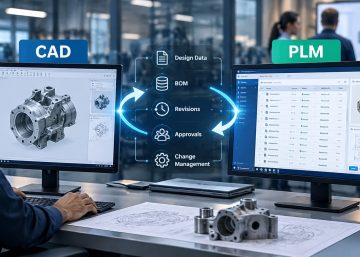
PLM systems integrate with CAD tools to:
- Manage design files
- Track revisions
- Control access permissions
- Maintain design history
This ensures engineers always work with the latest version of product data.
- Bill of Materials (BOM) Management
The Bill of Materials (BOM) is the backbone of product manufacturing.
PLM helps manage multiple BOM structures, such as:
- Engineering BOM (EBOM)
- Manufacturing BOM (MBOM)
- Service BOM (SBOM)
With PLM, teams can easily transition from design intent to production readiness without data loss.
- Engineering Change Management
Product designs frequently evolve due to improvements, quality issues, or regulatory requirements.
PLM systems streamline change processes by enabling:
- Engineering Change Requests (ECR)
- Engineering Change Orders (ECO)
- Automated approval workflows
- Complete change traceability
Studies show companies using structured change management processes reduce engineering rework by nearly 25%.
- Manufacturing Collaboration
PLM connects engineering teams with manufacturing teams to ensure products are production-ready.
Benefits include:
- Clear production documentation
- Reduced manufacturing errors
- Better communication between design and shop floor teams
This alignment significantly improves production efficiency.
- Service and Product Support
Even after products are delivered, PLM continues to provide value.
Organizations can manage:
- Service documentation
- Spare parts information
- Maintenance updates
- Product performance insights
This helps companies improve product quality over time.
Business Benefits of Implementing PLM
When implemented effectively, PLM delivers measurable improvements across the organization.
Improved Product Development Efficiency
PLM reduces duplication of work and ensures teams always have access to accurate information.
Better Cross-Team Collaboration
A centralized platform connects design, engineering, and manufacturing teams.
Faster Product Development Cycles
Organizations can launch products more efficiently by minimizing delays caused by manual processes.
Enhanced Product Quality
Complete visibility across the product lifecycle helps identify issues earlier.
Stronger Regulatory Compliance
PLM maintains complete documentation and traceability, which is crucial for regulated industries.
Best Practices for Successful PLM Implementation
Implementing PLM requires more than just installing software—it involves aligning processes, people, and technology.
Here are proven best practices organizations should follow.
Define Clear Business Objectives
Start by identifying the main challenges you want PLM to address, such as:
- Engineering collaboration
- BOM management
- Change control
- Design data management
Clear objectives guide the implementation process.
Standardize Product Data Structures
Consistent naming conventions, version control, and documentation practices ensure product data remains organized and searchable.
Integrate PLM with Existing Systems
For maximum efficiency, PLM should connect with systems like:
- CAD tools
- ERP platforms
- Manufacturing systems
- Quality management systems
This creates a connected digital environment across departments.
Encourage Cross-Department Collaboration
PLM adoption improves when teams across engineering, manufacturing, procurement, and quality participate in the implementation process.
Choose the Right PLM Partner
Successful implementation depends heavily on working with experienced technology partners who understand both engineering processes and PLM systems.
This is where organizations benefit from working with trusted providers like Sumedhas Tech Solutions.
Why Choose Sumedhas Tech Solutions for PLM?
Selecting the right PLM technology is only part of the journey. The real value comes from proper implementation, integration, and ongoing support.
Sumedhas Tech Solutions is an authorized PTC PLM license provider specializing in solutions such as PTC Windchill and Creo.
Our team helps organizations build structured PLM environments tailored to their engineering workflows.
What We Offer
Authorized PTC Licensing
Access industry-leading PLM solutions backed by official licensing.
PLM Implementation Services
End-to-end deployment aligned with your engineering processes.
Integration with CAD and Enterprise Systems
Seamless connection with tools like Creo and enterprise platforms.
Customization and Process Optimization
Solutions designed around your organization’s requirements.
Training and Support
Helping your teams maximize the value of PLM technologies.
Organizations that partner with experienced PLM specialists often achieve faster adoption and stronger ROI from their technology investments.
How PLM Improves Engineering Efficiency
Consider a mid-sized manufacturing company producing industrial equipment.
Before implementing PLM:
- Engineers stored CAD files locally
- Manufacturing teams relied on outdated BOMs
- Design changes caused production delays
After implementing PLM:
- All product data moved to a centralized platform
- Version control eliminated design confusion
- Change approvals became automated
- Manufacturing teams accessed real-time design updates
The company significantly reduced engineering rework and improved collaboration between teams.
The Future of Product Lifecycle Management
As products become more connected and complex, PLM continues to evolve.
Modern PLM environments now support:
- Digital thread connectivity
- Model-based engineering
- Smart product data management
- Integration with simulation and analytics platforms
Organizations adopting PLM today are building the foundation for smarter, more connected product development strategies.
Get Started with PLM Today
If your organization is struggling with scattered product data, engineering change delays, or inefficient collaboration, PLM can transform the way your teams work.
At Sumedhas Tech Solutions, we help engineering organizations successfully adopt PLM technologies—from licensing and implementation to integration and training.
Whether you are exploring PLM for the first time or looking to improve your current setup, our experts are here to guide you.
Let’s build a smarter product development environment—together.


You must be logged in to post a comment.