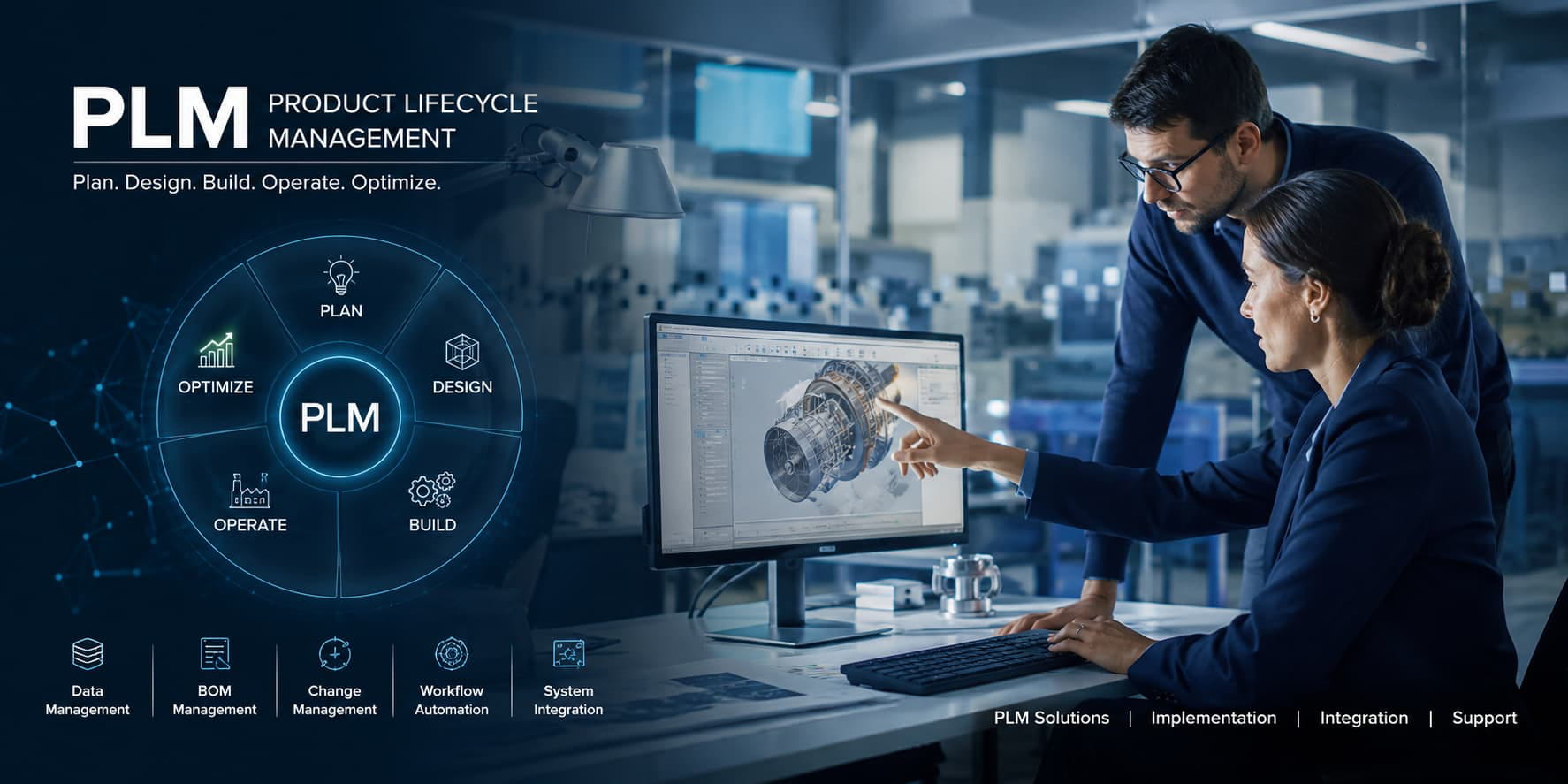
PLM Implementation Guide: Best Practices for Engineering Teams
In complex engineering environments, product data doesn’t just grow—it fragments. CAD files sit in one system, BOMs in another, and change approvals get buried in emails. The result is misalignment, version conflicts, and delays that directly impact delivery timelines and product quality.
This is where Product Lifecycle Management (PLM) becomes a critical engineering backbone—not just as software, but as a structured, data-driven framework that governs how product information is created, controlled, and consumed across its lifecycle.
What is PLM?
Product Lifecycle Management (PLM) is an enterprise-level information management system that integrates people, processes, and technology to manage all product-related data from concept through design, manufacturing, service, and retirement.
At a system level, PLM enables:
- Product Data Management (PDM) for CAD and engineering files
- Configuration Management for handling multiple product variants
- Change Management Workflows (ECO, ECN, ECR)
- Bill of Materials (BOM) Management across engineering and manufacturing
- Digital Thread Connectivity across enterprise systems
PLM acts as a single authoritative data source, ensuring consistency, traceability, and governance across the organization.
Core Components of a PLM Architecture
1. Product Data Management (PDM) Layer
Handles:
- CAD file storage and version control
- Metadata management
- Access control and permissions
2. BOM Management System
Supports:
- Engineering BOM (EBOM)
- Manufacturing BOM (MBOM)
- Service BOM (SBOM)
Ensures synchronization across departments and lifecycle stages.
3. Change & Configuration Management
Manages structured workflows such as:
- Engineering Change Requests (ECR)
- Engineering Change Orders (ECO)
- Engineering Change Notices (ECN)
Provides full traceability and audit readiness.
4. Workflow & Process Automation Engine
- Automates approvals and validations
- Reduces manual intervention
- Improves process standardization
5. System Integrations
PLM integrates with:
- ERP systems (for production and costing)
- MES systems (for shop floor execution)
- CAD tools (for design authoring)
This creates a connected digital thread across the product lifecycle.
Why PLM is Critical for Engineering Organizations
Engineering complexity is increasing with multi-domain systems (mechanical, electrical, software). Without PLM:
- Version mismatches lead to production errors
- Manual change tracking increases risk
- Data silos reduce collaboration efficiency
Industry benchmarks indicate:
- Up to 30% reduction in development cycle time
- Around 20–25% improvement in engineering productivity
- Significant reduction in rework and scrap
PLM ensures that every stakeholder works on validated, up-to-date data.
Best Practices for Successful PLM Implementation
-
Define a Clear Data Governance Model
Establish:
- Naming conventions
- Revision rules
- Access hierarchies
Without governance, PLM becomes another data repository instead of a controlled system.
-
Standardize Change Management Processes
Implement structured workflows for:
- Change requests
- Approvals
- Impact analysis
This minimizes uncontrolled modifications and ensures accountability.
-
Align EBOM, MBOM, and SBOM Early
Discrepancies between BOMs are a major source of inefficiency. Early alignment ensures smoother downstream processes.
-
Enable Seamless System Integration
Ensure tight integration between PLM, ERP, and MES to maintain data continuity and eliminate duplication.
-
Focus on User Adoption & Training
Even the most advanced PLM system fails without proper adoption. Invest in:
- Role-based training
- Hands-on workflows
- Continuous support
Planning a PLM rollout? A structured consultation can help you avoid common implementation pitfalls.
Common PLM Implementation Challenges
- Resistance to process standardization
- Legacy data migration issues
- Integration complexities
- Lack of internal expertise
- Poorly defined workflows
These challenges highlight the importance of working with an experienced PLM partner.
Why Choose Sumedhas Tech Solutions for PLM Implementation?
Sumedhas Tech Solutions delivers a comprehensive PLM ecosystem backed by technical expertise and industry alignment.
Our Key Strengths:
- Authorized PTC PLM License Provider
- Expertise in end-to-end PLM implementation
- Strong focus on engineering workflows and digital transformation
- Proven experience in training and workforce development
We ensure that PLM is not just deployed—but effectively integrated into your engineering processes.
PLM Services Offered by Sumedhas Tech Solutions
PTC PLM Software Licensing
Access industry-standard PLM platforms with expert guidance.
Implementation & Customization
Tailored solutions aligned with your product development workflows.
Integration Services
Seamless connectivity with ERP, MES, and CAD systems.
Training & Upskilling
Hands-on programs designed for engineers and teams.
Looking to evaluate PLM for your organization? Connect with our experts for a tailored approach.
Who Should Implement PLM?
- OEMs managing complex product configurations
- Tier suppliers handling multi-level assemblies
- Engineering service providers
- Organizations scaling product development operations
Building a Connected Product Ecosystem
PLM is no longer optional for organizations dealing with complex engineering data and cross-functional collaboration. It establishes a structured, traceable, and scalable framework for managing product information across its lifecycle.
With the right strategy and implementation partner like Sumedhas Tech Solutions, organizations can achieve higher efficiency, better quality control, and improved engineering outcomes.
Start Your PLM Journey
- Book a Free Technical Consultation Today
- Evaluate your current product data workflows
- Get expert recommendations tailored to your needs
Take the first step towards a fully integrated PLM ecosystem with Sumedhas Tech Solutions.


You must be logged in to post a comment.