
Smart Manufacturing Strategies to Accelerate Product Development
Imagine spending months developing a product, only to discover that a design error, an outdated drawing, or a delayed approval is holding up production. Your engineering team is ready, your customers are waiting, and every additional day adds pressure to your project timeline.
Sound familiar?
For many industrial businesses, the biggest obstacle to faster product development isn’t a lack of engineering expertise. It’s the disconnect between product design, engineering, procurement, quality, and production teams.
When these departments work with different files, disconnected systems, and manual approval processes, even a straightforward design change can trigger a chain of delays.
Smart manufacturing strategies can help change this by connecting people, processes, and product information across the entire development lifecycle. With technologies such as Product Lifecycle Management (PLM), 3D design, simulation, workflow automation, and digital collaboration, businesses can make better decisions, identify problems earlier, and move products from concept to production with greater confidence.
In this guide, we’ll explore practical strategies to accelerate product development, common challenges that slow industrial teams down, and how Sumedhas Tech Solutions can help businesses adopt the right PTC technologies for their needs.
What Is Smart Manufacturing, and How Does It Improve Product Development?
Smart manufacturing uses connected digital technologies, integrated data, and intelligent processes to improve how products are designed, developed, tested, and produced.
Instead of treating product development as a series of isolated activities, it connects each stage so that information flows between engineering, production, quality assurance, and other stakeholders.
Consider a company developing a new industrial pump. The design engineer creates the 3D model, the production team evaluates how to manufacture the components, procurement checks material availability, and quality engineers establish inspection requirements.
If these teams work independently, a change to one component may not reach everyone who needs to know about it. The result can be incorrect purchases, repeated work, or production delays.
With connected digital systems, teams can access reliable product information, review design changes, coordinate approvals, and identify potential issues earlier.
Some of the technologies supporting this approach include:
- Product Lifecycle Management (PLM): Centralizes product data, documents, engineering changes, and development workflows.
- Computer-Aided Design (CAD): Enables engineers to create and modify accurate digital product models.
- Simulation and analysis: Helps evaluate product performance before physical prototypes are built.
- Workflow automation: Reduces manual follow-ups and repetitive administrative work.
- Digital thread: Connects product information across design, engineering, production, and service.
The objective is simple: reduce avoidable delays while maintaining product quality, engineering accuracy, and control over costs.
Why Does Product Development Take Longer Than Expected?
Before implementing new technology, businesses need to identify where their existing processes are losing time.
Several recurring challenges can slow product development, even when an organization has skilled engineers and capable production teams.
1. Disconnected Engineering Data
When CAD files, specifications, bills of materials (BOMs), and technical documents are stored across different systems, employees may struggle to locate the correct information.
An engineer might unknowingly work on an outdated drawing, while the production team follows a newer revision. Resolving the resulting discrepancies can require additional inspections, design corrections, and approvals.
A centralized PLM environment helps teams access controlled, up-to-date product information and understand which revisions are approved for use.
2. Slow Engineering Change Approvals
Product designs evolve throughout development. A supplier may recommend an alternative component, a test may reveal a performance issue, or a customer may request a design modification.
Without a structured engineering change management process, these requests can remain stuck in email chains or require repeated manual follow-ups.
A digital workflow can route changes to the appropriate stakeholders, record decisions, and maintain a traceable history of revisions.
3. Excessive Physical Prototyping
Building a physical prototype takes time, materials, and engineering resources. If a design fails testing, the team may need to modify the product and repeat the process.
Digital modeling and simulation can help engineers evaluate selected design options before committing to physical builds. Physical prototypes remain important, but virtual validation can help teams identify certain problems earlier.
4. Poor Coordination Between Engineering and Production
A product may look excellent in CAD but still present difficulties during assembly, machining, or inspection.
When production engineers become involved too late, design modifications may be necessary after significant development work has already been completed.
Early collaboration allows engineering and production teams to review manufacturability, tooling, tolerances, material choices, and assembly requirements before designs are finalized.
5. Repeated Manual Tasks
Creating reports, updating spreadsheets, searching for files, requesting approvals, and communicating revisions can consume valuable engineering time.
Standardized workflows and automated information management help reduce administrative effort and allow employees to focus on technical problem-solving.
The key takeaway: Faster product development begins by removing unnecessary waiting, repeated work, and information gaps—not by asking engineering teams to work harder.
7 Smart Manufacturing Strategies to Accelerate Product Development
The right combination of technology and process improvements can help organizations shorten development cycles without compromising quality.
1. Implement PLM Software to Centralize Product Data
One of the most effective strategies is to establish a reliable, centralized system for managing product information.
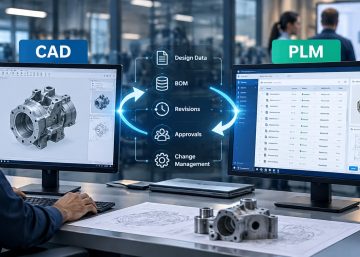
Product Lifecycle Management software connects product data, engineering documents, CAD information, BOMs, workflows, and revision histories within a structured environment.
Instead of searching through shared folders or asking colleagues to confirm which file is correct, authorized users can access the information relevant to their roles.
For example, when an engineer updates a component design, the change can be managed through a controlled process. Relevant teams can review the revision, assess its impact, and coordinate the necessary downstream updates.
This can help businesses:
- Reduce time spent searching for documents.
- Minimize errors caused by outdated design files.
- Improve visibility into engineering changes.
- Standardize approvals and development workflows.
- Strengthen collaboration between departments.
PTC Windchill is one PLM solution designed to manage product data, engineering changes, collaboration, and product development processes.
Want to see how PLM could improve your engineering workflow?
CTA: Request a PTC PLM Demo from Sumedhas Tech Solutions.
2. Use 3D CAD and Simulation to Identify Problems Earlier
Design changes become more expensive when problems are discovered late in development.
Digital design and simulation tools help engineers assess product geometry, fit, structural performance, thermal behavior, and other relevant engineering considerations before committing to physical builds.
For instance, an equipment manufacturer designing a load-bearing bracket could use simulation to evaluate stress distribution and compare alternative geometries. The team can then refine the design before producing a physical part for validation.
This approach may help reduce unnecessary prototype iterations, improve design decisions, and shorten the time required for selected validation activities.
However, simulation results depend on accurate assumptions, suitable models, and appropriate validation. Physical testing may still be necessary to verify real-world performance and compliance requirements.
By integrating design tools with broader product data management processes, organizations can also improve traceability between engineering decisions and approved product definitions.
3. Automate Engineering Change Management
Engineering changes are unavoidable. The delays associated with poorly managed changes are not.
A structured change management process ensures that proposed modifications are evaluated, approved, documented, and communicated to the right people.
For example, imagine a manufacturer replacing a component because its supplier can no longer meet delivery requirements.
The change may affect the engineering BOM, component specifications, procurement activities, assembly instructions, quality checks, and product documentation.
A well-managed digital workflow helps stakeholders assess these dependencies before the change is implemented.
Useful capabilities include:
- Automated approval routing.
- Revision tracking and change history.
- Impact assessment across related product data.
- Notifications for relevant stakeholders.
- Traceability from a change request to its approved implementation.
With PTC PLM solutions, organizations can establish more consistent engineering change processes and reduce the risk of teams acting on conflicting information.
4. Connect Engineering and Production Teams Earlier
Waiting until a design is complete before involving production teams can introduce avoidable rework.
A better approach is to encourage concurrent engineering, where design, production, procurement, and quality specialists contribute during the development process.
Consider a company designing a new industrial enclosure. Engineering may prioritize strength and appearance, while production specialists identify a bend radius that complicates fabrication. Procurement may also flag a long lead time for a particular material.
Addressing these concerns during design review is generally easier than correcting the product after tooling, purchasing, or production preparation has begun.
Connected product data and collaborative workflows help teams review the same information, discuss changes, and resolve concerns before they become costly downstream problems.
The benefits include:
- Earlier identification of production constraints.
- Better coordination of tooling and material requirements.
- Fewer late-stage design modifications.
- Improved communication between engineering and operations.
- More predictable preparation for production.
5. Improve Bill of Materials (BOM) Accuracy
A BOM is more than a list of components. It provides an important link between product design, procurement, assembly, and production planning.
If BOM information is inaccurate or inconsistent, teams may order the wrong components, overlook a revision, or discover assembly discrepancies during production preparation.
PLM-supported BOM management helps organizations maintain structured product configurations and coordinate engineering and manufacturing information.
For example, when an engineer changes a fastener specification, the organization needs to understand which product configurations use that fastener and whether the change affects procurement, assembly, or inspection.
A controlled BOM process helps stakeholders evaluate those dependencies and maintain greater consistency between engineering intent and production requirements.
For businesses managing complex assemblies, multiple product variants, or frequent design revisions, this can be particularly valuable.
6. Establish a Digital Thread Across the Product Lifecycle
Product development becomes more difficult when information is lost between stages.
A digital thread connects relevant product information across design, engineering, production, quality, and service. Rather than recreating information at every handoff, teams can use traceable data throughout the product lifecycle.
The National Institute of Standards and Technology (NIST) identifies improved information exchange and traceability across engineering, manufacturing, and quality as important elements of digital thread initiatives.
For industrial businesses, this means that design decisions can be linked to production requirements, inspection information, and later product changes.
For example, if a quality issue is identified during assembly, the team can investigate the affected component, its approved revision, related design decisions, and associated documentation.
This visibility helps organizations investigate issues more systematically and feed useful findings back into product development.
7. Measure Development Performance With Meaningful KPIs
You cannot reliably improve product development time without understanding where time is being spent.
Businesses should establish baseline measurements before introducing new tools or workflows. This makes it easier to determine whether changes are delivering measurable improvements.
Useful KPIs include:
- Concept-to-release time: The duration between initial project approval and design release.
- Engineering change cycle time: The time required to evaluate and approve a design change.
- First-pass approval rate: The proportion of submissions accepted without requiring another review cycle.
- Design rework hours: The engineering time spent correcting previously completed work.
- Prototype iteration count: The number of prototype rounds required before design validation.
- BOM error rate: The frequency of discrepancies in product structure information.
- On-time design release rate: The percentage of planned design releases completed on schedule.
Review these measures regularly and identify the largest sources of delay before setting improvement targets.
For example, if engineering changes spend most of their time waiting for approvals, automating approval routing may offer greater benefits than investing in additional design software.
The most effective improvement plan addresses the actual bottleneck rather than adding technology without a clear objective.
How Can Digital Twins Reduce Product Development Time?
A digital twin is a digital representation of a physical product, system, or process that can be used to analyze behavior and support decisions. Depending on its implementation, it may incorporate simulation models, operating data, and other connected information.
Digital twins can help engineers evaluate design alternatives, examine system interactions, and learn from the performance of products already in operation.
A McKinsey article on digital twins in product development reports that some organizations have reduced total development time by 20% to 50%, while some have also reduced the number of preproduction prototypes required. These are reported outcomes from particular implementations, not guaranteed results for every organization.
For an industrial equipment developer, a digital twin could help assess how changes in operating conditions affect system performance. Engineers can use those findings to investigate potential improvements before deciding which physical tests are necessary.
However, a digital twin is not automatically a substitute for testing. Its value depends on model quality, the availability of relevant data, and the suitability of the simulation for the intended decision.
Businesses should begin with a clearly defined engineering problem and assess whether digital twin capabilities can provide a practical benefit.
What Are the Business Benefits of Smart Manufacturing Strategies?
When digital tools are supported by well-defined processes, the benefits extend beyond faster design work.
Reduced Product Development Costs
Fewer avoidable design revisions, less duplicated work, and better coordination can help reduce engineering overhead and prototype-related expenses.
Faster Product Launch Preparation
When design information, BOMs, approvals, and production requirements are coordinated, teams can prepare for production with fewer information gaps.
Improved Product Quality
Earlier design reviews, controlled revisions, and better traceability help teams identify and address potential problems before they progress to later stages.
Better Cross-Functional Collaboration
Engineering, procurement, production, and quality teams can work from consistent information rather than relying on separate documents and manual updates.
Greater Visibility and Accountability
Structured workflows help managers identify pending approvals, review development progress, and determine where projects are encountering delays.
Stronger Knowledge Retention
Centralized product information and documented engineering decisions help organizations retain valuable knowledge when employees change roles or projects move between teams.
The actual benefits depend on the organization’s starting point, implementation quality, employee adoption, and the processes selected for improvement. Establishing measurable baseline KPIs is essential to evaluating the results.
Common Challenges When Implementing Smart Manufacturing Technologies
Introducing new software is only one part of improving product development. Organizations should also prepare for the operational challenges that can affect adoption.
Legacy Systems and Data Migration
Existing product information may be scattered across older systems, spreadsheets, and shared folders.
A practical implementation begins by assessing data quality, identifying essential information, and defining how existing systems will exchange data with the new platform.
Employee Adoption and Training
Teams may continue using familiar spreadsheets or email-based processes if the new system is difficult to understand or does not fit their daily work.
Role-specific training, clear process ownership, and practical demonstrations can help employees understand the benefits of the new workflow.
Unclear Implementation Goals
Deploying multiple tools without a defined business objective can increase complexity without resolving the original delays.
Organizations should identify specific problems—such as lengthy engineering approvals or frequent revision errors—and connect implementation milestones to measurable outcomes.
Integration With Existing Business Systems
Engineering information often needs to connect with ERP, CAD, quality, procurement, and production systems.
Integration requirements should be assessed early so that teams understand how data will flow, which system owns each type of information, and how inconsistencies will be handled.
Cost and Return on Investment
Licensing, implementation, integration, training, and ongoing administration all contribute to the total cost of ownership.
A phased approach can help organizations evaluate value before expanding the solution. For instance, a pilot focused on engineering change management may reveal whether workflow improvements justify broader deployment.
The most effective starting point is not necessarily the largest technology investment. It is the implementation that addresses a clearly identified business problem.
How Sumedhas Tech Solutions Helps Businesses Accelerate Product Development
Selecting the right software is important, but businesses also need a technology partner that understands their engineering workflows, implementation requirements, and operational objectives.
Sumedhas Tech Solutions is an authorized PTC PLM license provider that helps businesses explore and adopt PTC solutions aligned with their product development requirements.
From evaluating suitable software capabilities to supporting implementation-related needs, the focus is on helping organizations establish more connected, structured, and efficient product development processes.
PTC PLM Licensing for Your Business Requirements
Choosing a PLM platform involves understanding the organization’s product complexity, number of users, existing engineering tools, collaboration requirements, and planned growth.
As an authorized PTC PLM license provider, Sumedhas Tech Solutions can help businesses explore relevant PTC licensing options and identify capabilities suited to their requirements.
The objective is to make software selection more informed by connecting product capabilities to practical business needs.
PLM Implementation and Related Services
Software delivers value when it supports the way people actually work.
Depending on project scope, implementation-related services can help organizations evaluate their current processes, plan product data management workflows, improve engineering change control, and coordinate the introduction of PLM capabilities.
Businesses can discuss their specific requirements with Sumedhas Tech Solutions to understand which services and implementation approach are appropriate for their environment.
Guidance on PTC Windchill and Product Data Management
PTC Windchill provides capabilities for managing product information, engineering changes, product structures, and collaboration across development teams.
For organizations dealing with multiple design revisions, complex BOMs, or disconnected engineering information, Windchill may provide a foundation for improving product data control.
Sumedhas Tech Solutions can help prospective customers explore relevant PTC PLM capabilities and discuss how they may fit existing engineering and production workflows.
A Solution Aligned With Your Development Challenges
Every organization has different priorities. Some need better control over engineering revisions, while others want to improve collaboration between design and production or establish more consistent product data management.
Rather than assuming that every business needs the same solution, it is useful to begin with a discussion of the existing challenges, desired outcomes, and technical environment.
CTA: Talk to Sumedhas Tech Solutions About Your PLM Requirements.
Discuss your current product development challenges and explore suitable PTC PLM options for your organization.
How to Get Started With Smart Manufacturing Strategies
Businesses do not need to transform every process at once. A phased approach can help them build a strong foundation and demonstrate value progressively.
- Assess your current development process. Map the journey from concept to design release and identify delays, repetitive tasks, and information gaps.
- Prioritize one or two bottlenecks. Focus on problems with a measurable impact, such as engineering change delays, document version errors, or excessive design rework.
- Define clear performance targets. Establish baseline KPIs and determine how improvement will be measured.
- Evaluate the right technologies. Consider PLM, CAD integration, simulation, workflow automation, and other capabilities according to the identified requirements.
- Start with a manageable implementation scope. Pilot the solution with a suitable product line, team, or workflow before expanding across the organization.
- Train users and refine processes. Gather feedback, address adoption challenges, and adjust workflows based on actual usage.
- Review results and expand carefully. Compare performance against baseline measures and prioritize the next improvements based on demonstrated value.
This approach makes digital transformation more manageable while helping organizations understand which investments contribute most to their objectives.
Accelerate Product Development With Sumedhas Tech Solutions
Long development cycles can affect production planning, engineering capacity, customer commitments, and overall business performance. The solution is not simply to increase the pace of work. It is to make information easier to access, improve collaboration, reduce avoidable rework, and establish more reliable development processes.
Smart manufacturing strategies supported by PLM, CAD, simulation, and connected product information can help businesses address these challenges systematically.
With the right approach, organizations can improve engineering visibility, strengthen revision control, coordinate production requirements earlier, and make more informed product development decisions.
Sumedhas Tech Solutions helps businesses explore PTC PLM licensing and related services based on their product development needs.
Ready to identify the delays affecting your product development process?
Connect with Sumedhas Tech Solutions to discuss your requirements, explore suitable PTC PLM capabilities, and understand how a structured digital approach could support your engineering team.
Request a Free PTC PLM Demo or Consultation Today
Take the first step toward better product data management, stronger collaboration, and more predictable product development.
Frequently Asked Questions About Smart Manufacturing and Product Development
1. How Can Smart Manufacturing Strategies Reduce Product Development Time?
They can help reduce development delays through connected product data, automated workflows, digital design validation, better engineering change management, and earlier collaboration between engineering and production teams.
2. What Is the Role of PLM Software in Product Development?
PLM software helps manage product information, CAD documents, BOMs, revisions, engineering changes, and development workflows. It provides a structured environment for teams to collaborate using controlled product data.
3. How Does PTC Windchill Help Manufacturers?
PTC Windchill supports product data management, engineering change control, product structure management, and collaboration. These capabilities can help organizations improve traceability and coordination across product development.
4. Can Simulation Reduce the Need for Physical Prototypes?
Simulation can help engineers evaluate selected design options and identify certain performance issues before physical testing. However, physical prototypes and validation tests may still be required depending on product complexity, safety, and regulatory requirements.
5. What Is the Difference Between PLM and ERP?
PLM primarily manages product definition and development information, including engineering data and product changes. ERP focuses on broader business operations, such as finance, purchasing, inventory, and production planning. Integration between the systems can improve information consistency across the organization.
6. How Should a Business Begin Implementing PLM?
Start by identifying the main product development challenges, assessing existing systems and data, defining measurable objectives, and evaluating suitable PLM capabilities. A phased implementation with clear ownership and user training can make adoption more manageable.
7. Why Work With Sumedhas Tech Solutions for PTC PLM?
Sumedhas Tech Solutions is an authorized PTC PLM license provider. Businesses can discuss licensing requirements, relevant PTC capabilities, and applicable services to determine a suitable approach for their product development environment.


You must be logged in to post a comment.