Why Are Businesses Moving Towards Cloud-Based PLM?
Managing product information across different departments can become challenging as projects grow in complexity. Engineering teams may work with multiple versions of design files, product structures, technical documents and change records. When this information is spread across disconnected systems, teams can face delays, communication gaps and difficulties maintaining accurate product data.
This is where a reliable Product Lifecycle Management (PLM) solution becomes important.
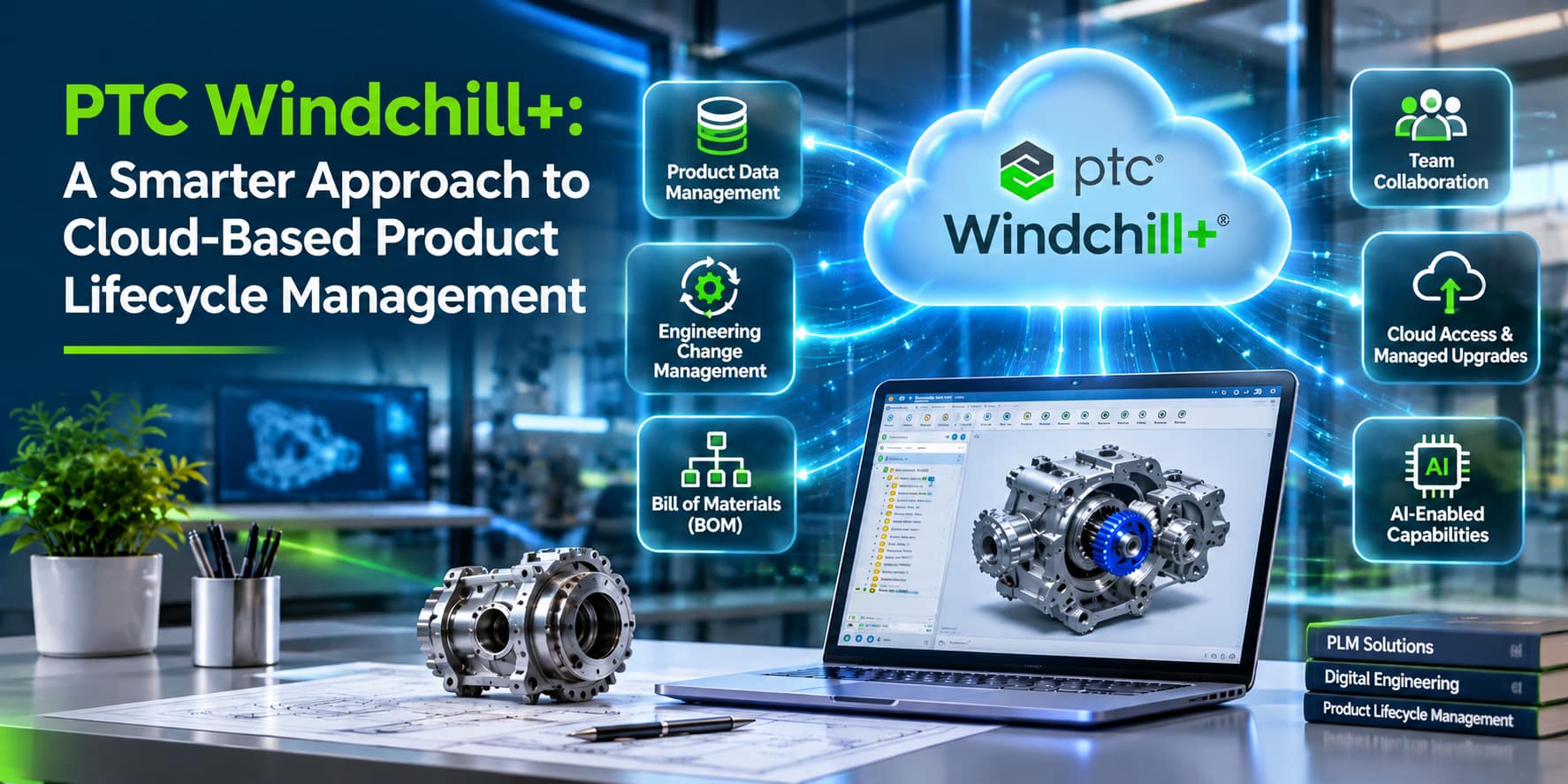
PTC Windchill+ brings PLM capabilities into a cloud-based environment, helping organizations manage product information, engineering changes, product structures and team collaboration. Its Software-as-a-Service (SaaS) delivery model also reduces the need for businesses to manage all the underlying PLM infrastructure themselves.
For organizations looking to improve product data management and simplify their engineering processes, Windchill+ offers an approach worth considering.
What Is PTC Windchill+?
PTC Windchill+ is a cloud-based PLM solution that helps organizations manage product-related information throughout the product lifecycle. It provides a centralized environment for handling engineering data, documents, Bills of Materials (BOMs), change processes and collaboration.
Unlike a traditional deployment that may require organizations to manage their own infrastructure, Windchill+ is delivered through a SaaS model. This allows businesses to access PLM capabilities while PTC manages key aspects of the cloud service, including platform maintenance and upgrades.
Windchill+ is designed to help organizations:
- Maintain consistent and organized product information.
- Manage engineering changes through structured workflows.
- Improve visibility into product structures and BOMs.
- Support collaboration between internal teams and external stakeholders.
- Reduce infrastructure management responsibilities.
- Access ongoing platform improvements through the SaaS model.
By bringing essential product information into a connected environment, organizations can improve coordination and make more informed decisions.
Key Features and Benefits of PTC Windchill+
Understanding the capabilities of Windchill+ can help businesses determine how it fits into their existing engineering environment. Here are some of its important features and benefits.
1. Centralized Product Data Management
Product information is valuable only when the right people can access accurate and updated data. Windchill+ provides a centralized environment for managing product documents, engineering records, product structures and related information.
This helps reduce confusion caused by multiple file versions and disconnected data sources. Teams can work with more consistent information, improving coordination across engineering and other departments.
For organizations handling complex product data, centralized management can also make it easier to maintain traceability and control throughout the product lifecycle.
2. Efficient Engineering Change Management
Product changes are a regular part of engineering projects. However, managing those changes without a structured process can create confusion, especially when multiple teams depend on the same product information.
Windchill+ supports engineering change management through workflows that help organizations review, track and manage changes.
This can help teams:
- Document proposed engineering changes.
- Assign responsibilities for review and approval.
- Track change status and related information.
- Maintain records of decisions and revisions.
- Improve visibility into how changes affect product data.
A structured change management process helps organizations maintain better control over product updates and reduce the possibility of communication gaps.
3. Better BOM Management
A Bill of Materials (BOM) defines the components and parts required for a product. Managing BOM information accurately is essential for organizations dealing with complex product structures.
Windchill+ provides capabilities for managing product structures and BOM information within the PLM environment.
By connecting product data and related engineering information, organizations can improve visibility into product composition, revisions and changes. This is particularly useful when several departments need to work with consistent product information.
4. Cloud-Based Access and Managed Upgrades
One of the important advantages of Windchill+ is its SaaS delivery model.
With a cloud-based PLM environment, organizations can reduce the effort associated with maintaining their own infrastructure. PTC manages key service operations and platform upgrades as part of the SaaS offering.
This can help businesses focus more on their engineering processes rather than spending significant internal resources on infrastructure maintenance.
Organizations should still evaluate their access requirements, integrations, security expectations and operational needs before choosing a cloud-based deployment.
5. AI-Enabled Capabilities
Windchill+ also includes AI-supported capabilities designed to assist users in working with product information.
These capabilities include features such as document summarization, part rationalization, AI assistance and data analysis.
For example, teams may use document summarization to understand lengthy technical information more efficiently. AI-assisted analysis can also help users examine product data and identify information that may require further attention.
These capabilities can support productivity, but they should complement established engineering review and approval processes rather than replace technical expertise.
6. Improved Collaboration and Product Traceability
Engineering projects often involve different departments, suppliers and business partners. When information is difficult to access or track, collaboration can become complicated.
Windchill+ supports controlled information sharing and connected workflows that help relevant stakeholders work with product-related information.
Its digital thread capabilities help connect information across different stages of the product lifecycle. This improves visibility into product data, engineering decisions and related changes.
For organizations managing complex projects, better traceability can support more consistent communication and decision-making.
PTC Windchill vs. Windchill+: Understanding the Difference
PTC Windchill and Windchill+ share a common foundation of PLM capabilities, but their delivery models are different.
Traditional Windchill deployments can be managed within an organization’s own infrastructure or through a suitable hosting arrangement. This may provide organizations with greater responsibility for infrastructure management and deployment decisions.
Windchill+, on the other hand, delivers PLM through a SaaS model. PTC manages key aspects of the cloud service, including platform operations and upgrades.
The choice between the two depends on several factors:
- Existing IT infrastructure and deployment preferences.
- Current PLM customizations and integrations.
- Data management and security requirements.
- Internal IT resources and maintenance capabilities.
- Business processes and long-term PLM objectives.
A proper assessment of these requirements can help organizations identify the most suitable option.
Is PTC Windchill+ Suitable for Your Organization?
Windchill+ may be worth evaluating if your organization is experiencing challenges with product data management, engineering collaboration or PLM infrastructure.
It can be particularly relevant for businesses that:
- Manage large volumes of engineering data and documents.
- Need structured engineering change processes.
- Want better control over product structures and BOMs.
- Require collaboration across multiple teams or locations.
- Prefer a SaaS-based PLM environment.
- Want to reduce the internal effort involved in maintaining PLM infrastructure.
However, moving to a cloud-based PLM platform requires careful planning. Existing systems, integrations, customizations, data migration requirements and user needs should all be considered before making a decision.
Organizations already using Windchill should also evaluate their current environment before planning a transition to Windchill+. A structured assessment can help identify required changes and reduce disruption during the transition.
How Sumedhas Tech Solutions Supports Your PTC PLM Requirements
Selecting a PLM solution is only one part of improving product data management. Businesses also need suitable licensing, technical guidance and support to align the software with their operational requirements.
Sumedhas Tech Solutions is an authorized PTC license provider and an engineering technology consulting and training company. We help organizations explore PTC software solutions and understand how they can support their engineering requirements.
Our areas of support include:
- PTC Software Licensing: Assistance with PTC software licensing based on organizational requirements.
- PLM Consulting: Guidance to understand PLM needs, workflows and suitable solution options.
- Implementation Support: Assistance with PLM implementation activities based on project scope.
- Customization and Integration: Support for adapting solutions and connecting systems, subject to technical feasibility and requirements.
- Training: Helping users understand software capabilities and work more effectively with the platform.
- Technical Support: Assistance with relevant technical and software-related requirements.
Whether you are evaluating Windchill+, reviewing your existing PLM environment or planning a transition to a cloud-based solution, Sumedhas Tech Solutions can help you understand the available options.
Explore our PTC PLM solutions and engineering technology services to understand how we support organizations with their software and engineering requirements.
Connect with Sumedhas Tech Solutions for PTC Windchill+
Managing product information efficiently is essential for organizations working with complex engineering processes. PTC Windchill+ provides a cloud-based approach to PLM, helping businesses connect product data, manage engineering changes and improve collaboration.
If you are considering Windchill+ or exploring suitable PTC PLM solutions, connect with Sumedhas Tech Solutions for licensing assistance and technical guidance.
Contact Sumedhas Tech Solutions today to discuss your PLM requirements.
Frequently Asked Questions About PTC Windchill+
1. What is PTC Windchill+ used for?
PTC Windchill+ is used for Product Lifecycle Management. It helps organizations manage engineering data, product structures, BOMs, documents, engineering changes and collaboration through a cloud-based platform.
2. Is PTC Windchill+ a cloud-based solution?
Yes. Windchill+ is delivered as a Software-as-a-Service (SaaS) PLM solution. PTC manages key aspects of the cloud service, including platform operations and upgrades.
3. What are the main benefits of Windchill+?
Some key benefits include centralized product data, structured change management, BOM management, improved collaboration, AI-enabled capabilities and reduced infrastructure maintenance responsibilities.
4. Can organizations migrate from Windchill to Windchill+?
Yes. Organizations can evaluate a transition from an existing Windchill environment to Windchill+. The process requires assessment of current infrastructure, customizations, integrations and data. Migration planning and validation are important for a successful transition.
5. Can Sumedhas Tech Solutions help with PTC Windchill+?
Yes. Sumedhas Tech Solutions can assist with PTC licensing, PLM consulting, implementation support, customization, integration, training and technical support based on project requirements. For assistance, contact our PTC PLM team.


You must be logged in to post a comment.