
How to Choose the Best PLM Software for Your Company
Your engineers have the latest CAD file. Your production team has a different BOM. Procurement is working from an older spreadsheet. And when someone asks, “Which version is correct?”—everyone looks at each other.
Sound familiar?
For many product-driven companies, the problem isn’t a lack of data. It is too much disconnected data spread across CAD tools, spreadsheets, emails, ERP systems, shared folders, and individual desktops.
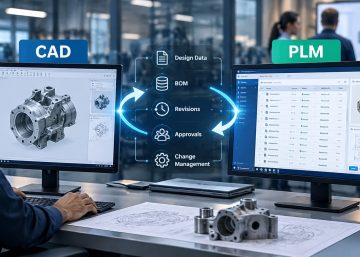
As products become more complex, teams need more than a place to store files. They need a reliable way to manage product information, engineering changes, bills of materials, approvals, configurations, documents, and collaboration across the product lifecycle.
That is where Product Lifecycle Management (PLM) software comes in.
But choosing a PLM platform is a significant decision. The right solution can bring engineering, quality, procurement, production, service, and other teams onto the same page. The wrong solution can result in unnecessary customization, adoption problems, integration headaches, and disappointing ROI.
So, how do you choose the right PLM software for your company?
Let’s break it down.
What Is PLM Software and Why Does Your Company Need It?
PLM software provides a centralized environment for managing product information and processes from initial concept and design through production, service, and retirement.
Instead of relying on disconnected systems, teams can work with controlled product information and structured workflows.
A capable PLM platform can help manage:
- CAD and engineering data
- Product structures and BOMs
- Engineering changes
- Documents and specifications
- Product configurations
- Parts and component information
- Approval workflows
- Supplier collaboration
- Quality processes
- Manufacturing processes
- Service information
- Product traceability
When Should You Consider Implementing PLM?
You may be ready for PLM if your organization is experiencing problems such as:
- Engineers spending too much time searching for files
- Multiple versions of drawings or documents circulating
- Frequent BOM discrepancies
- Manual engineering change approvals
- Delays caused by email-based collaboration
- Difficulty identifying the impact of a design change
- Repeated creation of similar or duplicate parts
- Limited visibility into product status
- Difficulty maintaining traceability
- Poor collaboration between engineering and other departments
- Growing product complexity
- Increasing supplier collaboration requirements
If any of these sound familiar, it may be time to evaluate your current product data processes.
Want to know whether your organization is ready for PLM? Request a free PLM consultation with Sumedhas Tech Solutions.
8 Key Factors to Consider When Choosing PLM Software
Selecting PLM software shouldn’t begin with a list of features.
It should begin with a clear understanding of your business problems.
Here are the most important factors to evaluate.
1. Start With Your Business Problems, Not the PLM Feature List
One of the most common mistakes companies make is comparing PLM platforms based entirely on features.
More features do not automatically mean a better fit.
Instead, identify the problems you want PLM to solve.
For example:
Problem: Engineers cannot find the latest approved drawing.
PLM requirement: Controlled document and CAD data management.
Problem: Engineering changes are approved through email.
PLM requirement: Structured engineering change workflows.
Problem: Engineering and production use different BOM structures.
PLM requirement: Connected BOM and product structure management.
Problem: Teams create duplicate components.
PLM requirement: Parts classification and reuse capabilities.
This approach makes the evaluation far more practical.
Before speaking to vendors, create a list of your top five operational pain points and ask every PLM provider to demonstrate how their platform addresses those exact scenarios.
That way, you are evaluating business outcomes rather than impressive software screens.
2. Evaluate BOM Management Capabilities Carefully
The BOM is one of the most important pieces of product information in an organization.
A single product can involve engineering BOMs, manufacturing BOMs, service BOMs, software structures, variants, and multiple configurations.
If these structures are managed manually or independently, discrepancies can quickly appear.
A strong PLM platform should help your teams:
- Create and manage product structures
- Control BOM revisions
- Track changes
- Manage product configurations
- Connect related product information
- Support downstream BOM structures
- Maintain traceability
- Reduce duplicate data entry
A Practical Example
Imagine an engineering team changes a component specification.
Without connected product data, someone may need to manually update:
- The CAD model
- The engineering BOM
- The production BOM
- Procurement information
- Documentation
- Service information
If one of those updates is missed, the organization can end up working with inconsistent information.
PLM helps establish controlled relationships between these product structures.
Have BOM discrepancies become a recurring issue? Talk to Sumedhas PLM experts about a practical BOM management approach.
3. Look for Strong Engineering Change Management
Engineering changes are unavoidable.
The real question is whether your organization can manage them without creating confusion.
A change request may affect:
- Parts
- CAD files
- BOMs
- Suppliers
- Specifications
- Production processes
- Quality documentation
- Service information
- Regulatory records
A PLM solution should provide a controlled process for initiating, reviewing, approving, implementing, and tracking changes.
What to Ask During a PLM Demo
Don’t settle for a generic workflow demonstration.
Ask the vendor to demonstrate this scenario:
“A critical component needs to be changed after the design has already been released. Show us exactly what happens.”
Then look at:
- Who receives the change request?
- Who reviews it?
- How are affected components identified?
- How are approvals handled?
- What happens to previous versions?
- How are downstream teams notified?
- Can the complete change history be audited?
That demonstration can reveal much more than a standard product presentation.
4. Check CAD, ERP, MES and Other Integrations
Your PLM system will rarely operate alone.
Most organizations already use several business and engineering applications.
Your PLM solution may need to connect with:
- CAD software
- ERP
- MES
- CRM
- Quality systems
- Supplier systems
- Document management platforms
- IoT or connected-product platforms
Why Integration Matters
Suppose engineering releases a new product structure.
If that information has to be manually re-entered into another system, you introduce another opportunity for:
- Data entry errors
- Delays
- Duplicate information
- Version confusion
- Unnecessary administrative work
The goal should be a connected flow of information rather than isolated applications.
Not sure how PLM should connect with your existing systems? Book a free integration consultation with Sumedhas Tech Solutions.
5. Prioritize Data Security, Version Control and Traceability
Product data can represent years of engineering knowledge and significant intellectual property.
Your PLM platform should therefore provide appropriate controls for:
- User access
- Permissions
- Revision control
- Data visibility
- Approval history
- Change history
- Audit trails
- Controlled document access
That distinction is critical for organizations where traceability and accountability matter.
6. Assess Scalability and Ease of Adoption
A PLM system may work perfectly for a small engineering team but become difficult to manage as the organization grows.
Think beyond your current number of users.
Ask:
- Can the platform support additional teams?
- Can it accommodate more products?
- Can it support multiple sites?
- Can suppliers collaborate securely?
- Can new workflows be added?
- Can additional PLM capabilities be introduced later?
- Can the system support cloud deployment if required?
- How easy is it for occasional users to access relevant information?
This matters because PLM should support your organization’s changing requirements without forcing you to redesign your entire information architecture every few years.
7. Compare Cloud, On-Premises and SaaS PLM Options
Deployment is another important consideration.
Depending on your organization’s IT strategy, security requirements, internal expertise, and infrastructure preferences, you may evaluate:
- On-premises PLM
- Cloud-hosted PLM
- SaaS PLM
Cloud and SaaS options can reduce some infrastructure responsibilities while providing easier access and managed upgrades.
However, deployment should be selected based on your actual requirements—not simply because one option sounds more modern.
Consider:
Data requirements + IT capabilities + security + integration + total cost + user needs = deployment decision
8. Don’t Ignore Implementation, Training and Support
Choosing software is only half the project.
Implementation determines whether your organization actually gets value from the platform.
A strong PLM partner should be able to help with areas such as:
- PLM strategy
- Requirement analysis
- Solution architecture
- Configuration
- Data migration
- Integration
- Workflow design
- User training
- Testing
- Deployment
- Post-go-live support
- System optimization
This is particularly important because PLM often changes how multiple departments work together.
Even excellent software can struggle if employees don’t understand why processes are changing or how the system benefits their daily work.
What Are the Biggest PLM Implementation Challenges?
Understanding potential challenges before selecting your platform can save considerable time later.
Challenge 1: Employees Continue Using Spreadsheets
If teams don’t trust the PLM system, they may continue maintaining their own spreadsheets.
Solution: Build clear ownership rules and make PLM the authoritative source for defined product information.
Challenge 2: Too Much Customization
Customization may appear attractive because it makes the software behave exactly like your existing process.
But excessive customization can increase complexity and make upgrades more difficult.
Solution: First evaluate whether standard PLM functionality can address the requirement.
Challenge 3: Poor Data Quality
Migrating years of inconsistent product data into a new system doesn’t automatically fix the underlying problem.
Solution: Establish data-cleaning and migration rules before implementation.
Challenge 4: Lack of User Adoption
If engineers, production teams, quality teams, and other stakeholders don’t see value in the system, adoption can suffer.
Solution: Involve representative users early, design practical workflows, provide training, and demonstrate how PLM removes specific pain points.
Challenge 5: Choosing Software Without Defining Success
A company may successfully implement PLM but still struggle to prove its business value.
Solution: Establish measurable objectives before implementation.
For example:
- Reduce engineering change approval time
- Reduce duplicate parts
- Improve document retrieval
- Reduce BOM discrepancies
- Improve revision traceability
- Reduce manual data entry
- Improve cross-functional visibility
What Are the Business Benefits of Choosing the Right PLM Software?
When PLM is correctly selected and implemented, the benefits can extend well beyond engineering.
Better Product Data Visibility
Teams can access controlled product information instead of searching through disconnected folders and email threads.
Improved Engineering Productivity
Engineers spend less time managing information manually and more time working on product-related tasks.
More Controlled Engineering Changes
Changes can follow structured workflows with appropriate approvals, traceability, and impact analysis.
Better Collaboration
Engineering, quality, procurement, production, suppliers, and service teams can work from connected product information.
Reduced Data Duplication
Parts classification and reuse capabilities can help organizations identify existing components before creating new ones.
Improved Product Quality
When the right people have access to the right revision and related product information, the possibility of errors caused by outdated information can be reduced.
Stronger Traceability
A controlled product record makes it easier to understand the history of product changes and decisions.
How to Compare PLM Software Vendors: A Practical Checklist
Once you’ve shortlisted PLM platforms, use a structured comparison rather than relying on presentations.
Ask each provider to demonstrate the following:
Product Data Management
Can we manage CAD, documents, parts and revisions centrally?
BOM Management
Can we manage complex product structures and configurations?
Change Management
Can we control and track engineering changes?
Collaboration
Can multiple teams securely access relevant product information?
Integration
Can it connect with our CAD, ERP and other enterprise systems?
Security
Can we control access based on roles and responsibilities?
Traceability
Can we see the complete history of product changes?
Scalability
Can the platform support additional users, sites and products?
Deployment
Does it support our cloud or on-premises requirements?
Customization
Can workflows be configured without excessive customization?
Implementation
Does the provider offer implementation and migration support?
Training
What training and adoption support is available?
Support
What happens after go-live?
Total Cost
What are the license, implementation, integration and support costs?
The best demonstration is not the one with the most features.
It is the one that shows how the software solves your actual business problems.
Why PTC Windchill Is Worth Evaluating for Complex Product Environments
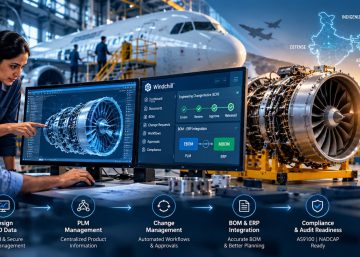
For organizations dealing with complex products, multiple teams, extensive product data, and structured engineering processes, PTC Windchill is a PLM platform worth evaluating.
Windchill provides capabilities across product data management, BOM management, engineering change management, configuration management, collaboration, classification, process planning, and service-related product information.
It can also connect product information across engineering and downstream functions, helping organizations establish greater continuity across their product lifecycle.
But technology alone isn’t enough.
The implementation approach, configuration strategy, integration architecture, user adoption plan, and ongoing support can have a major impact on the value you receive from PLM.
That is where the right PLM partner becomes important.
Why Choose Sumedhas Tech Solutions for PTC PLM?
Choosing a PLM platform is one decision.
Getting it to work effectively for your organization is another.
Sumedhas Tech Solutions is an authorized PTC PLM license provider and also provides PLM services to help organizations adopt and use PTC solutions effectively.
Whether you are evaluating PLM for the first time, replacing fragmented product data processes, expanding an existing PLM environment, or looking for support with your PTC ecosystem, Sumedhas can help you approach the project from both a technology and business-process perspective.
Our services can support organizations with areas such as:
- PTC PLM licensing
- PLM consulting
- Windchill implementation
- PLM customization and configuration
- System integration
- Data migration
- Workflow development
- User training
- PLM support and optimization
Why This Matters
Imagine your team has spent years developing its own processes.
A generic implementation may force those processes into a rigid system.
A thoughtful PLM engagement should work differently.
It should begin by understanding:
How does your organization develop products today?
Then:
Where are the bottlenecks?
Then:
Which processes should be standardized, automated, integrated, or redesigned?
Finally:
How should PLM support those processes?
That business-first approach can make the difference between simply installing software and creating a useful product information environment.
Planning a PTC Windchill implementation? Speak with Sumedhas Tech Solutions to discuss your requirements.
How Much Does PLM Software Cost?
There is no single PLM price that applies to every organization.
The total investment can depend on factors such as:
- Number and type of users
- Required PLM modules
- Deployment model
- Implementation complexity
- Data migration requirements
- Integration requirements
- Configuration and customization
- Training
- Support
- Number of locations
- Existing IT infrastructure
Instead of evaluating PLM purely on license price, consider the total cost of ownership and expected business impact.
A lower initial software cost may not be economical if the platform requires extensive customization or cannot integrate effectively with your existing environment.
Similarly, a more capable platform may deliver greater value if it addresses several costly information and process problems.
Looking for a PLM cost estimate based on your actual requirements? Request a consultation with Sumedhas Tech Solutions.
7 Questions to Ask Before Buying PLM Software
Before signing a PLM agreement, ask your shortlisted provider:
1. Can you demonstrate our actual use cases?
Generic demonstrations are not enough.
2. How will the PLM system integrate with our existing applications?
Integration should be discussed early.
3. What will implementation involve?
Understand responsibilities, timelines, migration, testing, training, and support.
4. How much customization will we really need?
Ask what can be achieved through configuration and standard capabilities.
5. How will our existing product data be migrated?
Data migration deserves its own plan.
6. How will you measure PLM success?
Agree on measurable business and operational objectives.
7. What support will we receive after implementation?
PLM is not necessarily a one-time software purchase. Your organization may require ongoing optimization, support, training, and expansion.
Your PLM Selection Should Begin With the Problems You Want to Solve
The right PLM software isn’t necessarily the platform with the longest feature list.
It is the platform that aligns with your:
- Product complexity
- Engineering processes
- Data requirements
- Collaboration needs
- Existing software ecosystem
- Compliance requirements
- Growth plans
- IT strategy
- Budget
- User expectations
Start with the problems.
Map those problems to required capabilities.
Test shortlisted platforms using real scenarios.
Evaluate integration and implementation requirements.
Then select the solution and partner that can support your organization throughout the journey.
For companies considering PTC Windchill, having access to both authorized licensing and experienced PLM services can simplify the evaluation and implementation process.
Ready to Find the Right PLM Solution for Your Company?
Choosing PLM doesn’t have to be a complicated software-shopping exercise.
The right conversation can start with something much simpler:
“Here are the problems we’re facing. Can PLM solve them?”
At Sumedhas Tech Solutions, we can help you evaluate your PLM requirements, explore PTC solutions, understand implementation considerations, and identify an approach that fits your organization.
Whether you are at the research stage, comparing PLM platforms, planning a Windchill implementation, or looking for support with an existing PTC environment, our team can help you take the next step.
Book Your Free PLM Consultation Today
Discuss your current challenges with our PLM experts and explore how PTC Windchill could fit into your product development processes.
Sumedhas Tech Solutions — Your PTC PLM Licensing & Services Partner.

You must be logged in to post a comment.