
Why PLM Is the Backbone of Scalable Product Development
Many teams still believe Product Lifecycle Management is nothing more than a shared folder for design files. That misunderstanding often leads to delayed launches, repeated errors, and teams working in silos without realizing the root cause.
A modern PLM system does far more than store data. It governs how products are planned, designed, validated, released, updated, and eventually retired. When used correctly, it becomes the system that brings structure, clarity, and accountability across the entire product journey.
Organizations that understand PLM capabilities don’t just manage information better—they reduce errors, shorten delivery timelines, and scale operations without confusion or data loss.
What Problems Do Growing Engineering Teams Face Without PLM?
Before understanding what PLM enables, it’s important to look at the common challenges teams experience without a structured system:
- Multiple versions of the same design circulating internally
- Bill of Materials mismatches between design and production
- Untracked changes leading to costly rework
- Delays caused by manual approvals and email-based reviews
- Difficulty identifying who changed what, and why
- Compliance gaps due to missing documentation
Industry studies indicate that design and data errors can account for up to 30–40% of avoidable rework costs in product-driven organizations. These issues are rarely caused by people—they stem from disconnected systems and uncontrolled data flow.
This is exactly where PLM plays a critical role.
Core Capabilities of a Modern PLM System
Centralized Product Information Management
PLM creates a single, reliable location for all product-related data, including designs, specifications, documents, and approvals. Everyone works from the same information, reducing confusion and misalignment.
See how centralized data reduces internal errors → Request a demo
End-to-End Product Lifecycle Visibility
From early concepts to final retirement, PLM maintains continuity across every stage. Teams can track progress, dependencies, and decisions without jumping between tools or spreadsheets.
Version and Revision Control
PLM records every update made to a product, ensuring older versions are never accidentally reused. This alone prevents a significant number of downstream issues caused by outdated files.
Structured BOM Management
Managing Bills of Materials manually often leads to inconsistencies. PLM allows teams to create, update, and synchronize multi-level BOMs, ensuring alignment across departments.
Controlled Change Management Processes
Engineering changes are inevitable, but unmanaged changes create risk. PLM introduces structured workflows for change requests and approvals, ensuring every modification is reviewed, documented, and traceable.
According to industry reports, organizations using formal change management systems experience up to 25% fewer late-stage errors.
Explore how structured change control improves reliability
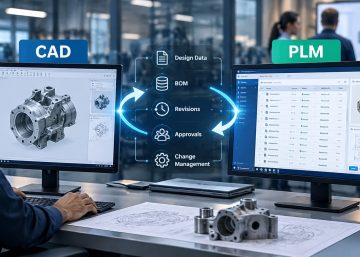
CAD Data Integration
PLM connects design tools directly with product records, ensuring that drawings and models remain linked to approved product data. This eliminates the manual effort of tracking files across locations.
Cross-Team Collaboration Enablement
When teams work in isolation, errors multiply. PLM connects engineering, quality, sourcing, and operations through shared workflows and real-time visibility.
Workflow Automation
Manual approvals slow teams down and introduce inconsistencies. PLM automates reviews, releases, and approvals, ensuring processes follow defined rules every time.
Secure Document Control
Important documents such as specifications, test reports, and compliance records are securely stored, versioned, and accessible only to authorized users.
Traceability and Compliance Readiness
PLM maintains a digital record of requirements, changes, and approvals. This traceability simplifies audits and reduces the risk of non-compliance penalties.
Role-Based Data Access
Not everyone needs access to everything. PLM ensures users see only the data relevant to their role, improving security and accountability.
Integration with Enterprise Systems
PLM synchronizes product data with ERP and shop-floor systems, reducing manual data entry and ensuring consistency across the organization.
Configuration and Variant Handling
For organizations managing multiple product variants, PLM handles configurations without duplicating data, reducing complexity and errors.
Analytics and Reporting Insights
PLM provides visibility into cycle times, change frequency, and bottlenecks, enabling better decision-making based on real data instead of assumptions.
Scalability and Cloud Readiness
As organizations grow, PLM systems scale with them, supporting expanding teams, product lines, and global collaboration.
Real-World Scenario: Before and After PLM
Before PLM:
A design update is shared via email. One team uses the updated file, another continues with an older version. The mismatch is discovered late, leading to rework, delays, and increased costs.
After PLM:
The update is released through a controlled workflow. All teams automatically access the approved version, and the previous revision is locked. Errors are avoided before they occur.
Why PLM Is a Strategic Requirement, Not a Tool
Organizations that use PLM effectively don’t just manage products better—they operate with clarity and control. Studies show that structured lifecycle systems can reduce rework by up to 40% while improving delivery timelines and team alignment.
PLM becomes the foundation that supports growth without chaos.
Why Choose Sumedhas Tech Solutions for PLM License?
Authorized PTC PLM License Provider
Sumedhas Tech Solutions is an authorized provider of PTC PLM licenses, ensuring customers receive genuine, supported, and scalable solutions aligned with global standards.
End-to-End PLM Services
Beyond licensing, Sumedhas delivers implementation, integration, customization, training, and ongoing support—ensuring PLM adoption delivers real business value.
Industry-Aligned Expertise
With experience supporting engineering-driven organizations, Sumedhas understands practical challenges and tailors solutions accordingly.
Long-Term Partnership Approach
PLM is not a one-time deployment. Sumedhas works as a long-term partner, helping teams evolve processes as needs grow.
Talk to a PLM expert at Sumedhas → Schedule a consultation
When Is the Right Time to Invest in PLM License?
You should consider PLM if:
- Teams struggle with version confusion
- Changes are hard to track
- Errors repeat across projects
- Collaboration feels fragmented
- Scaling feels difficult
If any of these sound familiar, PLM is no longer optional—it’s necessary.
Take your Next Step with Confidence
A well-implemented PLM system transforms how teams work, communicate, and deliver products. With the right partner, it becomes a powerful enabler of consistency, clarity, and controlled growth.
Ready to see how PLM fits your organization?
Book a FREE PLM demo or consultation with Sumedhas Tech Solutions today


You must be logged in to post a comment.